
What’s the Difference Between In-Law Suites vs. Legal Suites?
Many homeowners assume an in-law suite and a legal suite are the same thing, but in reality, they’re defined very differently once building codes and municipal rules come into play. The difference determines whether the space can be legally rented, insured, and recognized as a separate residential unit.
This distinction becomes especially important when homeowners start thinking about rental income or long-term property value. A finished basement or secondary space may look complete, but without compliance, it may still be considered non-conforming. At Bowline Construction, this is where clarity matters most, because building or converting a suite isn’t just about finishing a space; it’s about ensuring it meets the standards required for safe and legal use.
What Is an In-Law Suite?
An in-law suite is a broad, informal term used to describe a secondary suite within a home that is designed for flexibility rather than legal classification. These spaces are commonly used for family members, guests, or extended stays and can include a bedroom, bathroom, small kitchen, and separate entrance. It is key to note that “in-law suite” describes how the space is used, not whether it meets any legal standard.
Because the term isn’t regulated, an in-law suite can exist in many forms, including fully finished basements, converted garages, or additions that were never formally approved as separate dwelling units. In some cases, they may comply with code, but in others, they don’t meet requirements for rental or independent occupancy.
This lack of standardization is where confusion often begins for homeowners considering future rental potential.
What Is a Legal Suite?
A legal suite is a secondary dwelling unit that has been formally approved by the local municipality and meets all applicable zoning, building, and safety code requirements. Unlike an in-law suite, the term “legal suite” refers to the suite’s official approval status, not simply how the space is used.
To be recognized as a legal secondary suite, the space must pass permits, inspections, and safety reviews that allow it to function as an independent living unit. These requirements help protect occupants and ensure the suite is eligible for rental use, insurance coverage, financing, and future resale value.
Common legal suite requirements often include:
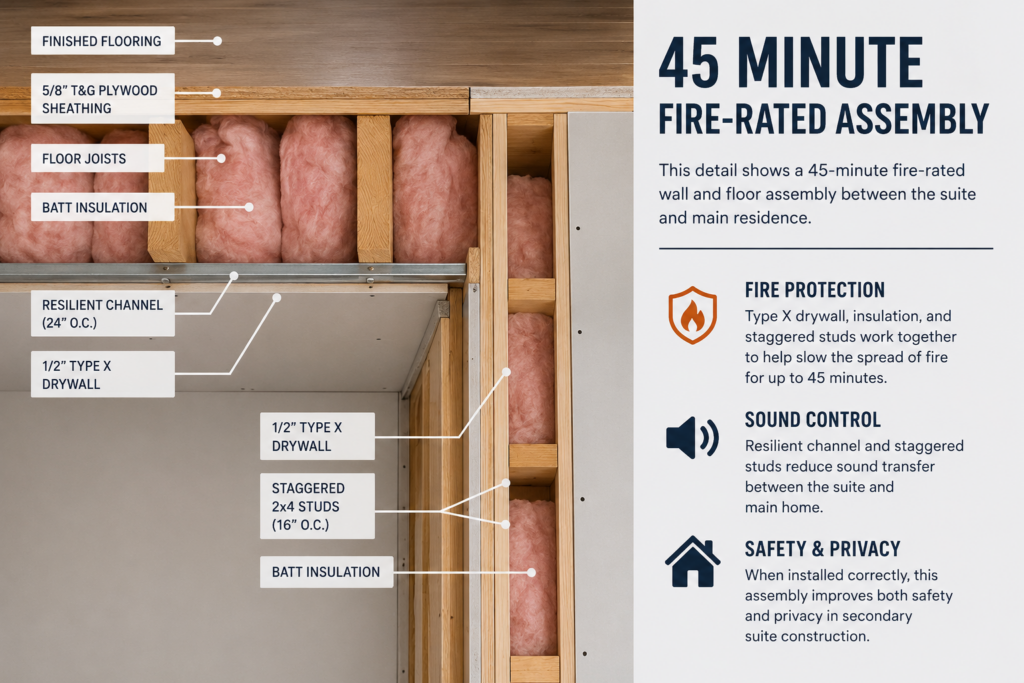
- Fire separation between units for improved safety
- Emergency exits or egress windows for safe evacuation
- Code-compliant electrical and plumbing systems
- Proper heating and ventilation for healthy airflow
- Sound separation between living spaces
- Minimum ceiling height and occupancy requirements
- Smoke and carbon monoxide detectors installed to code
- Separate entrances where required by local law
- Required permits, inspections, and municipal approval
Legal requirements vary by municipality, so homeowners should always confirm local zoning rules, permit requirements, and building codes before constructing or renting out a secondary suite.
Why is a Finished Basement Not Automatically a Legal Suite?
A finished basement may look like a complete living space, but that does not automatically make it a legal suite. Legal status depends on permits, inspections, and compliance with local building codes, not just how finished the space appears.
Without proper approval, key requirements like fire separation, emergency egress windows, and permitted electrical or plumbing work are often missing. Fire safety is particularly important, as you may have as little as two minutes to escape a home in the event of a fire. As a result, many finished basements remain non-compliant even if they function as informal living or rental spaces.
What Are the Financial and Legal Risks of Renting an Illegal Suite?
Renting out a suite that has not been approved as a legal dwelling unit can create serious financial and legal exposure for homeowners. Municipalities can issue fines, require removal of tenants, or mandate costly retrofits to bring the space up to code after the fact.
Common risks of renting an illegal suite include:
- Municipal fines or bylaw violations
- Orders to remove tenants or stop renting the unit
- Expensive upgrades required to meet building code
- Insurance claim denials related to unpermitted rental spaces
- Personal liability for tenant injuries or property damage
- Problems during home sales, refinancing, or property inspections
- Disputes with tenants over safety or living conditions
- Reduced property value or complications with future permits
Insurance is another major concern, since many policies may deny claims if a fire, flood, or injury occurs in an unpermitted rental unit. That can leave homeowners fully responsible for damages or legal liability. What may seem like a short-term shortcut can quickly become a significant long-term financial consequence.
Can You Legally Rent Out an In-Law Suite?
In-law suites are often built or finished with the intention of creating additional living space for family or potential rental use. Whether they can legally be rented depends on local approval as a secondary dwelling unit under zoning and building codes.
What Insurance and Resale Implications Do Homeowners Often Miss?
Insurance coverage can become complicated when a suite is not legally approved as a secondary dwelling unit. If a claim arises and the insurer determines the space was rented without proper permits or inspections, coverage may be reduced or denied entirely. This can leave homeowners responsible for repairs, damages, or liability costs that would normally be covered.
Resale value is also affected because buyers, lenders, and inspectors look for documented compliance. A legal suite can add value and market appeal, while an unpermitted suite may raise red flags or require removal before closing. Even if the space is well-built, a lack of legal status can limit financing options and reduce buyer confidence.
Should You Legalize Your Existing In-Law Suite?
Legalizing an existing in-law suite often comes down to whether the current space can realistically meet municipal building code requirements without requiring a full rebuild. Many homeowners discover that while the layout works for family use, it may be missing key elements like fire separation, proper egress windows, or permitted mechanical systems needed for approval.
The decision also involves weighing cost versus long-term value. Upgrading a space to meet legal standards can improve rental potential, increase resale value, and reduce liability risk, but it may also require significant construction work depending on how the suite was originally built. In many cases, a professional assessment is needed to determine what can be retained and what must be modified to achieve compliance.
How Does Bowline Construction Help Homeowners Build or Convert Legal Suites?
Bowline Construction supports homeowners through the process of creating new legal suites or converting existing spaces into compliant secondary dwelling units. Whether building a suite from the ground up or upgrading a basement or in-law suite, the focus is on creating a safe, functional space that meets local zoning and building code requirements.
The process typically begins with assessing the property and reviewing what is needed for legal approval. For existing spaces, this means identifying which features already meet code and which areas require upgrades. For new suites, the process involves planning layouts, permits, and construction details that align with municipal regulations from the start.
From there, the team at Bowline Construction helps manage the planning and construction process, including permits, inspections, design adjustments, and required code upgrades. This may involve improving fire separation, correcting egress issues, upgrading electrical and plumbing systems, or ensuring the suite meets occupancy, ventilation, and ceiling height requirements.
The goal is to create a legal suite that is not only comfortable and functional but also officially approved for long-term rental use, insurance coverage, financing, and future resale value.
FAQs About In-Law vs Legal Suites
What is the main difference between an in-law suite vs a legal suite?
An in-law suite is an informal term for a secondary living space within a home, often used for family or flexible living arrangements. A legal suite is a formally approved dwelling unit that meets zoning, building code, and inspection requirements.
Can I rent out my in-law suite without making it legal?
In most cases, renting is only permitted if the suite has been approved as a legal secondary dwelling unit. Without permits and inspections, renting may violate local bylaws and create legal and insurance risks.
What makes a suite legally compliant?
A legal suite must meet municipal building codes, which typically include fire separation, proper emergency egress windows, and approved electrical and plumbing systems. These requirements vary by municipality, but are geared towards ensuring the space is safe for independent occupancy.
Does a finished basement automatically count as a legal suite?
No. A finished basement is not automatically a legal suite unless it has been specifically permitted and inspected as one. Finishes alone do not determine legal status.
Can Bowline Construction help make my suite legal?
Yes. Bowline Construction can assess an existing space and identify what is needed to bring it up to code, including permits, structural updates, and compliance-focused renovations.
Building Safely and Legally with a Clear Path Forward
The difference between an in-law suite vs. a legal suite comes down to permits, inspections, and municipal approval, not just how finished the space appears. While in-law suites are often used for flexible or family living, only legal suites are recognized for rental use and independent occupancy.
Skipping compliance can lead to fines, insurance issues, and costly renovations later. The team at Bowline Construction helps homeowners design and convert spaces into fully legal suites that are safe, compliant, and built to add long-term value. Reach out today to discuss your secondary suite.